I Am a “Guajiro Criollo” Born in Camajuaní, Cuba
Reflections on being a “guajiro criollo” born in Camajuaní, Cuba—its countryside, folklore, simple people, parrandas, values, architecture, and cultural identity.
MY CUBAN-AMERICAN JOURNEY
Maestro Bobby Ramirez
7/24/20264 min read
I Am a “Guajiro Criollo” Born in Camajuaní, Cuba
Memories of a Simple Countryside Town, Its Folklore, Its People, and the Roots That Never Leave Me
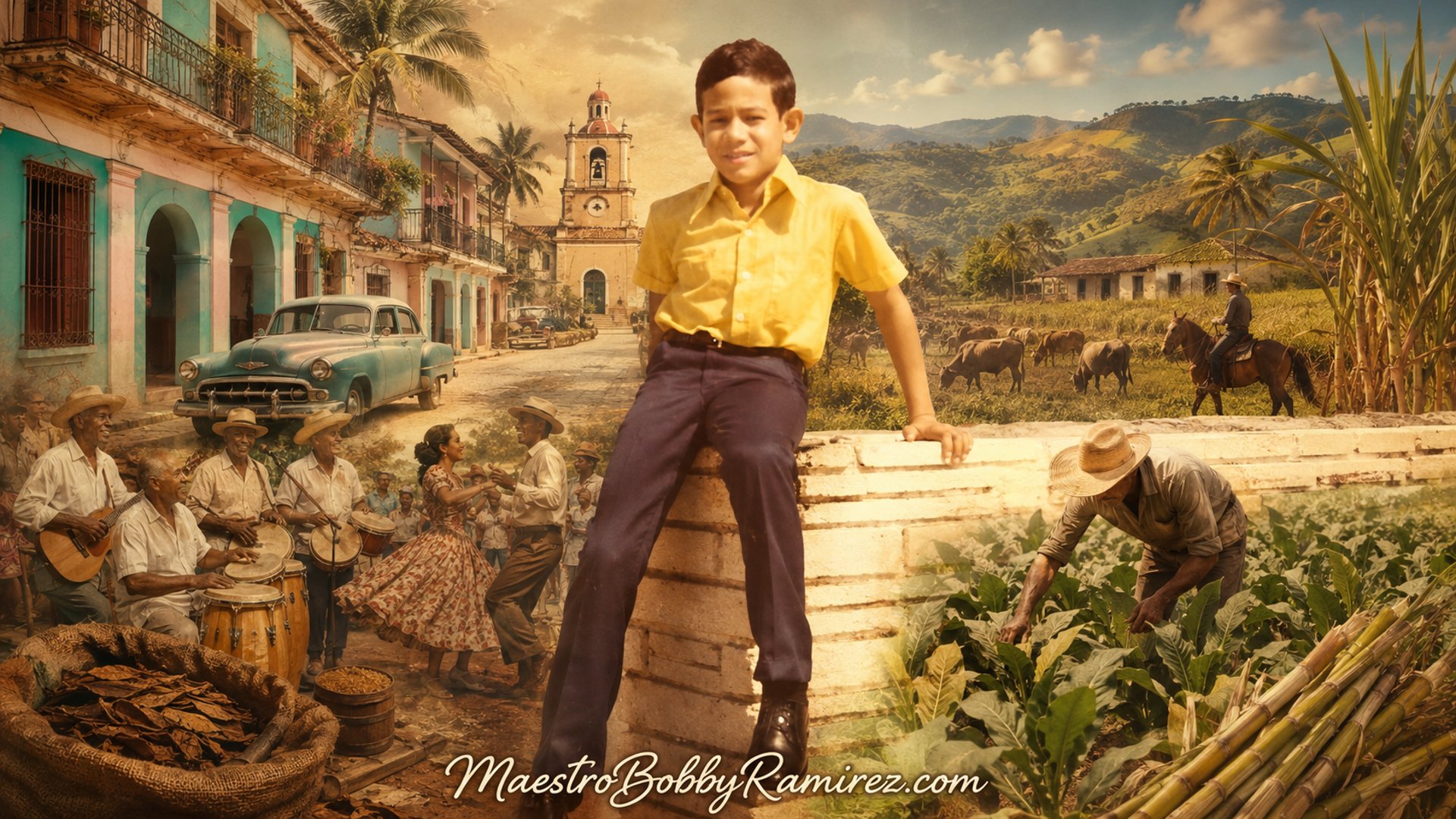
I was born in Camajuaní, Cuba, a simple countryside town in Villa Clara where the land itself seemed to speak. To say that I am a “guajiro criollo” is not just to say where I came from. It is to say that I carry inside me the smell of wet earth after the rain, the sound of roosters in the morning, the distant rhythm of drums, the laughter of neighbors, and the memory of walking through vast cow pastures under the open Cuban sky. Camajuaní was not a place of luxury. It was a place of roots. A place where life was measured by family, work, music, faith, respect, and the rhythm of the land.
The Scenery of My Childhood
When I think of Camajuaní, I see greenery everywhere—valleys, country roads, sugar cane fields, tobacco farms, mango trees, and the kind of open spaces that make a child feel free. I remember climbing trees, running through the countryside, strolling past cow pastures, and feeling that the whole world was made of sunlight, grass, animals, and imagination.
There was beauty in the simplicity. The smell of wood smoke, fresh coffee, tobacco leaves, cane fields, and home-cooked meals was part of daily life. Even the silence had music in it: the wind through the trees, the animals in the distance, the creaking of old doors, and the soft voices of people talking from porch to porch.
The Sounds of Guateques, Bembés, and Parrandas
Camajuaní was also a town of sound. The countryside had its own orchestra. There were neighborhood guateques where people gathered with guitars, voices, stories, and spontaneous joy. There were bembés, where drums carried spiritual memory and African roots into the present. And of course, there were the Parrandas—those great explosions of lights, music, fireworks, pride, and rivalry that form such an important part of the folklore of central Cuba.
In Camajuaní, the Parrandas are not just entertainment. They are identity. They are the voice of the town speaking through art, sound, humor, competition, and tradition. The Chivos and the Sapos are more than names; they represent memory, community, and the playful fire of a people who know how to celebrate life even through hardship.
The People and Their Values
The country people of Camajuaní were simple, but not small. They were strong, humble, respectful, hardworking, and deeply connected to family. They knew how to share what little they had. A neighbor was not a stranger. A child belonged to the whole block. Elders were respected. Music was not something separate from life—it was part of weddings, wakes, celebrations, prayers, street gatherings, and everyday conversation.
To be raised around country people is to learn that dignity does not depend on money. It depends on character. It depends on your word, your work, your love for family, and your respect for the traditions that came before you.
Architecture, Streets, and Town Life
Camajuaní has the feeling of an old Cuban town shaped by Spanish and criollo influences: colorful facades, colonial-style details, ironwork, high ceilings, old doors, portals, and streets where people once sat outside to talk, watch, and belong. Its architecture may not be grand like Havana’s, but it has soul. It reflects a town built by working people, farmers, merchants, musicians, families, and generations who left their mark quietly.
The town’s connection to agriculture, railroads, sugar, tobacco, and nearby communities gave Camajuaní its practical character. It was a place where the countryside and the town were always connected.
Folklore as Identity
For me, Cuban folklore is not something found only in books or museums. I lived it. I heard it in the drums, in the décimas, in the street celebrations, in the old sayings, in the dances, in the way people dressed for special occasions, and in the way families passed stories from one generation to another.
Camajuaní taught me that folklore is identity. It is the memory of a people. It is the way a town explains itself without having to write it down. It is in the music, the food, the faith, the jokes, the traditions, the celebrations, and even the nostalgia.
The Nostalgia That Stays With Me
No matter where life has taken me, Camajuaní remains inside me. I may walk through big cities, perform on stages, write books, compose music, and speak to audiences far from Cuba, but somewhere inside, I am still that guajiro criollo child walking through cow pastures, climbing trees, listening to distant drums, and feeling the mystery of my homeland.
To be born in Camajuaní is to understand that greatness can begin in a humble place. It is to know that the countryside can educate the soul. It is to carry Cuba not as a memory alone, but as a living rhythm in the heart. I am proud to say it: I am a guajiro criollo, born in Camajuaní, Cuba. And wherever I go, that land, that music, those people, and that folklore go with me.
#Camajuaní #VillaClara #Cuba #GuajiroCriollo #CubanFolklore #FolkloreCubano #CubanHeritage #Parrandas #Guateque #Bembé #CubanCulture #CubanIdentity #NostalgiaCubana #RaícesCubanas #MaestroBobbyRamirez


Performing at the JW Marriott Turnberry Miami


Maestro Bobby Ramirez
Thanks be to GOD for my Talent - I AM
Contact form
© 2026 Maestro Bobby Ramirez. All rights reserved.
About
Music
Videos
Blog
Shop
Education
Reviews
News